Why a Chlorinator Matters for Your Swimming Pool
Omnia supplies inline and offline chlorine feeders. Compare how they connect, where each arrangement may fit, and why water testing remains essential.
Updated
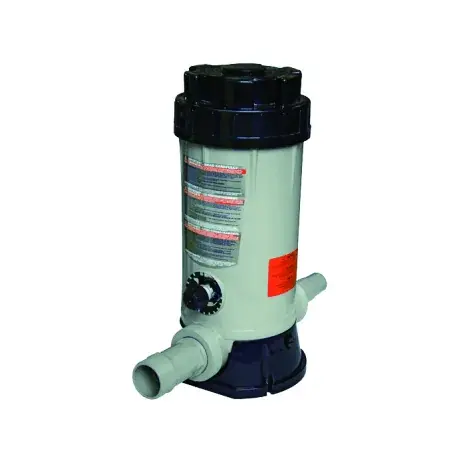
Should a chlorine feeder sit directly in the return pipe, or connect beside it through smaller lines? That is the practical difference between inline and offline chlorinators. Omnia supplies both arrangements, including the Poolking PCF03A and PCF03B.
Either can help organise chlorine delivery when correctly selected and installed. Neither replaces water testing: filtration removes suspended particles, while disinfection and water balance require their own checks.
What Does a Chlorinator Do?
The term “chlorinator” can describe different types of equipment:
Chlorine feeders dispense a compatible chlorine product into the water. Tablet feeders use the tablet type specified by their manufacturer.
Salt chlorine generators produce chlorine from salt dissolved in the pool water.
Liquid-chlorine dosing systems deliver liquid disinfectant through a dosing arrangement.
These systems use different consumables and have different installation and maintenance requirements. Omnia Pools supplies both inline and offline chlorine feeders. This article explains their uses and how to choose between them for your swimming pool.
Why Consistent Chlorine Management Matters
Supporting pool disinfection
Maintaining suitable free chlorine and pH helps control germs that can cause swimming-related illness. Chlorine takes time to work, and some germs can survive longer even in properly maintained water. A chlorinator supports chlorine delivery as part of a wider water-care routine. Read the CDC’s pool-water guidance.
Responding to changing chlorine demand
Chlorine demand changes with pool use and conditions. Sunlight and contaminants brought into the water by swimmers can reduce chlorine levels. A treatment setting that works during quiet periods may need reviewing when more people use the pool.
Water-test results should guide any adjustment. The equipment’s presence alone does not confirm that the water has the required chlorine level.
Helping control algae
Maintaining suitable sanitizer levels also helps prevent excessive algae growth. Algae can cloud the water and make pool surfaces slippery. An established algae problem may require additional treatment, brushing and cleaning according to the conditions and product instructions. See Health Canada’s pool-care guidance.
Making Routine Chlorine Delivery Easier
A suitable feeder can reduce some repeated manual dosing work by dispensing the specified chemical through its operating system. This can help owners and operators organise a more consistent maintenance routine.
The feeder still needs attention. Its supply must be checked and replenished, its operation inspected, and treatment reviewed against water-test results. The level of automation depends on the equipment selected.
Chlorine delivery and automatic water-chemistry control are separate functions. Before buying, confirm whether the proposed system includes chlorine measurement, pH monitoring or automatic adjustment, and which functions require additional equipment.
Inline and Offline Chlorinators: What Is the Difference?
Both types dispense a compatible chlorine product into circulating pool water. Their main difference is how they connect to the plumbing.
Inline Chlorinator: Connected Directly to the Pipework
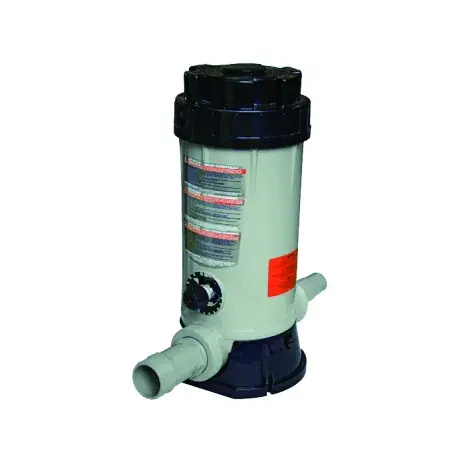
The PCF03A connects directly into return pipework. Leave the lid and dosing control accessible for the checks and replenishment described in its manual.
An inline chlorinator is installed directly in the pool’s circulation return pipework. Water passes through the feeder’s connection assembly as part of the circulation system. The exact location, connections and protective arrangements must follow the selected model’s instructions.
Typical uses:
New pool installations where space and pipework can be planned for the feeder.
Equipment-room renovations where the circulation plumbing is being updated.
Existing pools with suitable pipework and access for a direct installation.
Omnia lists the Poolking PCF03A inline chlorine feeder kit, with a stated 4 kg holding capacity. The catalogue also includes the PCF01 inline feeder, with a 1.9 kg holding capacity. Model selection should account for the pool’s treatment requirements and installation conditions. View the PCF03A or PCF01.
Offline Chlorinator: Connected Through a Bypass Arrangement
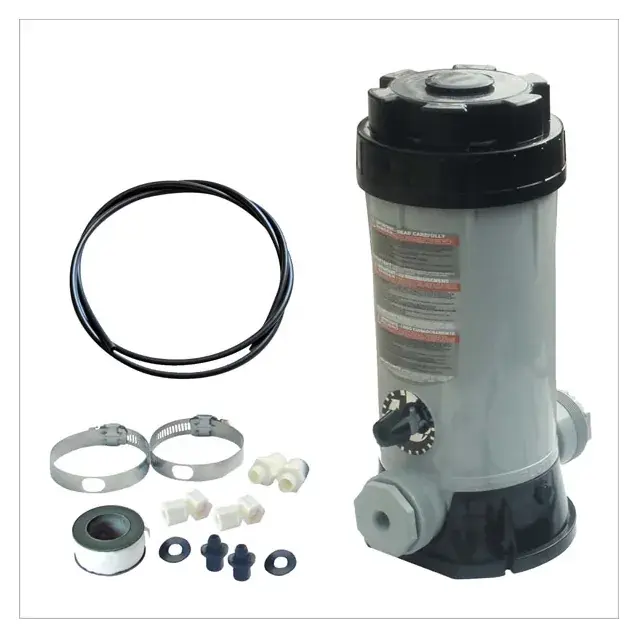
The PCF03B sits beside the main pipework and uses separate connecting lines. This bypass arrangement is the reason it is called an offline feeder.
An offline chlorinator sits beside the main pipework and connects to it through smaller inlet and outlet lines. A portion of the circulating water passes through the feeder and returns to the system. “Offline” describes this plumbing arrangement; the feeder still relies on the circulation system to operate.
Typical uses:
Adding a feeder to an existing pool where a bypass arrangement is suitable.
Installations where placing the feeder directly in the main pipe run is impractical.
Equipment layouts that offer a suitable nearby position for the feeder and its connecting lines.
Omnia lists the Poolking PCF03B offline chlorine feeder kit, with a hose adaptor and a stated 4 kg holding capacity. The installer should confirm its bypass connections and operating requirements for the actual pool. View the PCF03B offline feeder.
A Quick Comparison
Connection: Inline: Installed directly in the main return pipework. Offline: Connected beside the main pipework through inlet and outlet lines.
Typical application: Inline: New installations, renovations or suitable existing pipework. Offline: Suitable bypass installations, including upgrades to existing pools.
Planning requirement: Inline: Compatible pipe connections and room for direct installation. Offline: Suitable connection points, connecting lines and an accessible mounting position.
Omnia example: Inline: Poolking PCF03A — 4 kg holding capacity. Offline: Poolking PCF03B — 4 kg holding capacity.
Follow the supplied model’s manual for the actual connection points, operating conditions and protective arrangements.
The stated kilogram capacity is the amount of chemical the feeder can hold. It is not a recommended chlorine dose or a sufficient guide to the pool size it can serve. Neither arrangement is automatically the better choice: the right feeder depends on the installation and treatment requirements.
Water Testing Remains Essential
Regular testing shows whether the treatment is working as intended. Check free chlorine and pH, then adjust treatment according to the results, chemical labels and equipment instructions.
For home pools, the CDC recommends checking chlorine and pH at least twice daily, with more frequent checks during heavier use. Hotel and shared-use pools need an operating routine suited to their use and applicable requirements.
A saltwater pool also needs these checks: its generator produces chlorine from salt, so it still relies on chlorine and appropriate water balance.
Choosing and Maintaining the Right System
Selection should consider pool volume, expected swimmer use, chlorine demand, circulation hours, the choice of inline or offline connection, and compatibility with existing equipment. For an upgrade, share photographs and model details of the current installation with Omnia.
Have the installer establish the feeder’s position and protective arrangements from its manual, and include commissioning and an operating handover in the installation scope.
Use only the chemicals specified for the device, follow their labels and never mix different pool chemicals. Keep up the rest of the maintenance routine, including cleaning, filtration servicing and water checks.
Discuss Pool Chlorination with Omnia Pools
Send Omnia your existing equipment labels and a photograph of the pipework where a feeder could be installed. For a new pool, discuss inline or offline chlorination while the circulation layout is being designed.
Website: Omnia Pools
Phone: +977 9801177495
Email: contact@omniapools.com