Swimming Pool Resurfacing: When Does Your Pool Need a New Finish?
Loose tiles, damaged grout or recurring cracks? Learn when cleaning or local repairs may be enough and when a tiled pool needs a new finish.
Updated
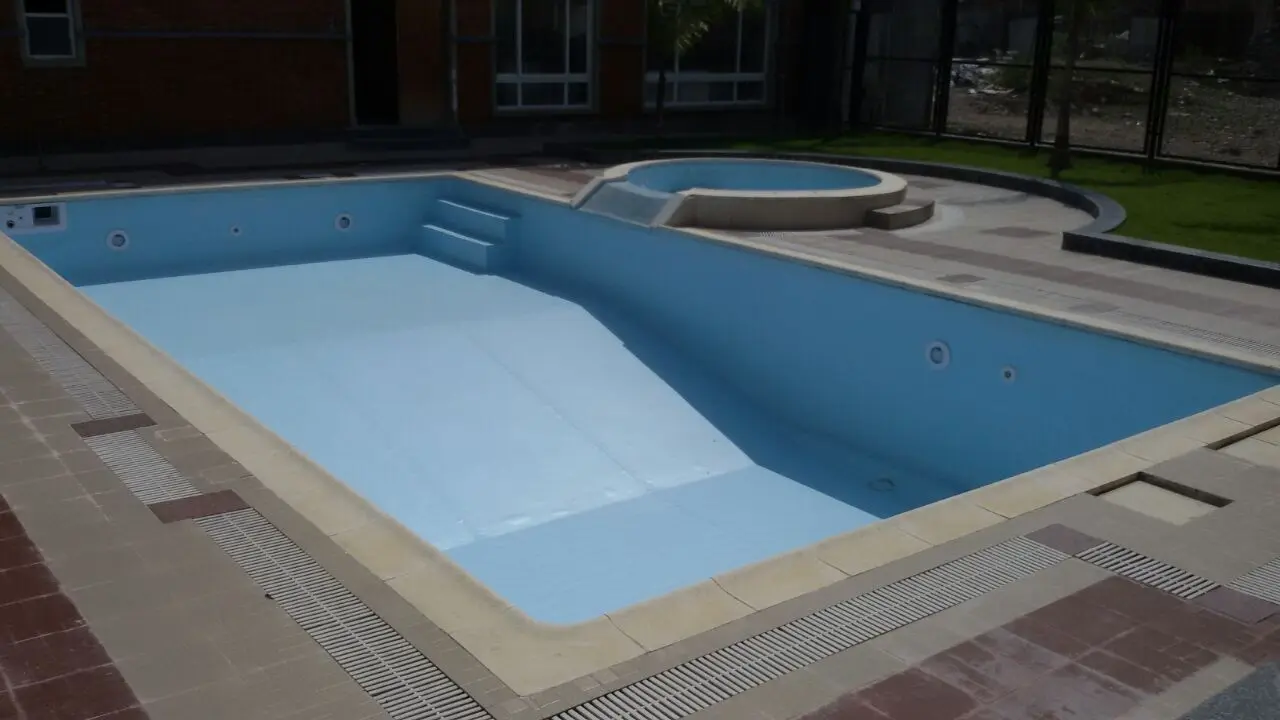
A stained waterline, a loose tile and a crack that returns after repair call for different responses. Before replacing the whole interior, find out whether the problem is on the surface or beneath it.
Omnia Pools usually uses tiles for resurfacing and investigates water loss through its own specialists. The assessment comes first: cleaning or a local repair may be enough, while widespread failure can call for a new finish.
What Does Swimming Pool Resurfacing Mean?
Resurfacing involves renewing the pool’s interior finish. In a tiled pool, that may mean replacing the tiled finish after assessing the existing installation and completing necessary preparation and repairs.
The visible tiles are part of a wider system that includes the supporting surface, waterproofing, adhesive, grout, and joints. A successful renovation needs to consider how these layers work together.
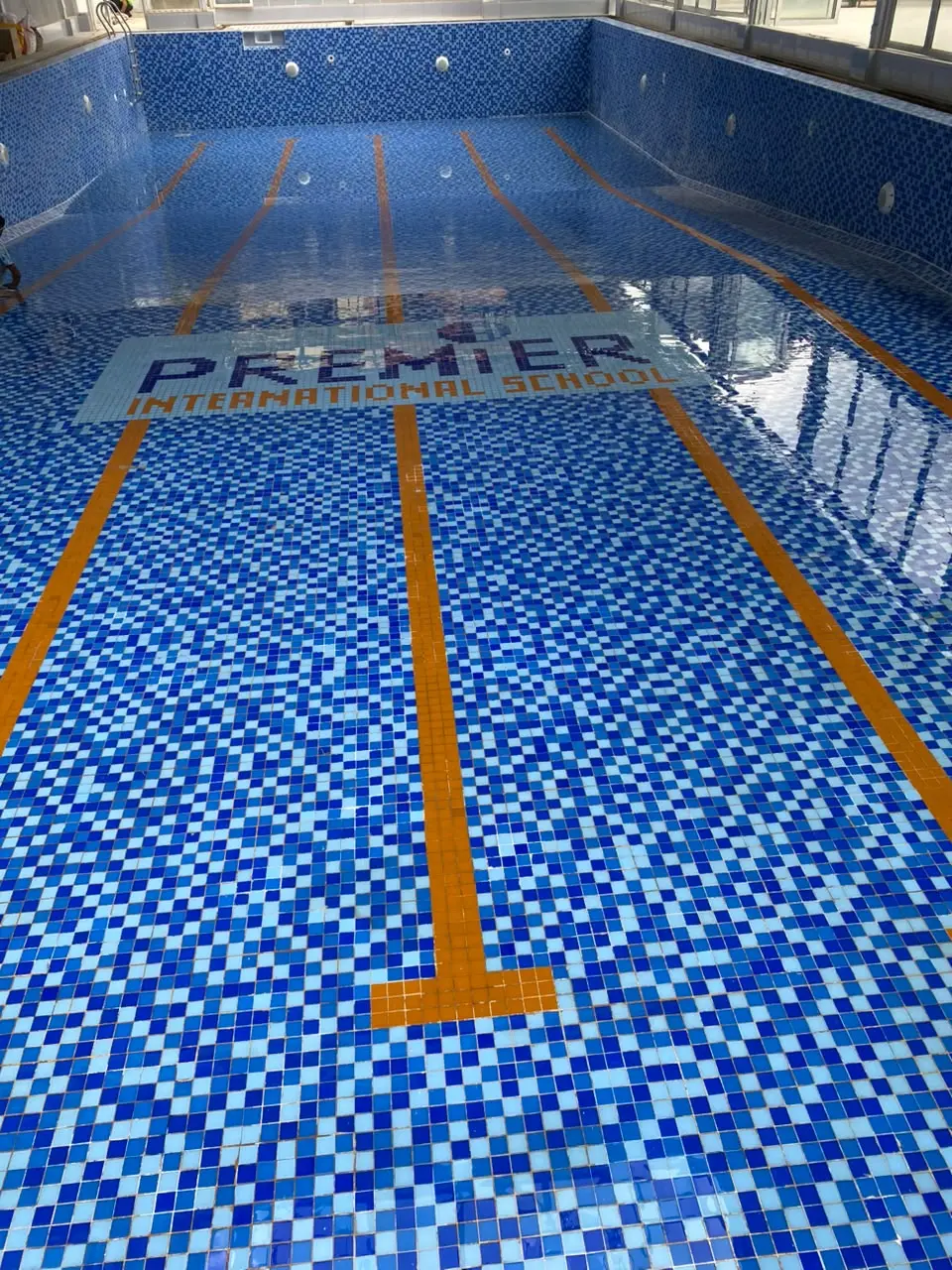
Premier International School’s mosaic floor shows the school name and contrasting lane markings worked into the finish. This is a finish reference; it does not document a resurfacing project.
Pools with vinyl or reinforced-PVC interiors require a different assessment and renewal method. You can explore the differences in Omnia’s tile-versus-vinyl guide.
Signs Your Pool Interior Needs Attention
Loose, Missing, or Cracked Tiles
An isolated damaged tile does not automatically mean the entire pool needs resurfacing. However, repeated tile loss or damage across several areas deserves investigation.
An assessment should establish whether the problem is limited to individual tiles or involves the installation beneath them.
Deteriorating Grout
Missing or damaged grout can affect the appearance and condition of the tiled surface. Local renewal may be appropriate where the surrounding installation remains sound.
Regrouting should not be treated as a universal solution for water loss. The waterproofing, joints, fittings, and other possible causes need consideration.
Persistent Stains and Deposits
A dull or marked surface may need suitable cleaning rather than replacement.
Waterline dirt and mineral deposits should be assessed separately from permanent discoloration or damaged tiles. Identify the cause and use cleaning methods compatible with the installed materials before deciding on resurfacing.
Recurring Cracks
Cracks that return after repairs need further assessment. Covering them with a new finish may leave the underlying problem unresolved.
The repair plan should address the cause before the replacement surface is installed.
When Might Cleaning or Local Repairs Be Enough?
A limited intervention may suit a pool where the problem is confined to a small area and the surrounding finish remains in good condition.
For example, the assessment might identify removable deposits, individual damaged tiles, or a local grout defect. Before proceeding, check the cause, the condition of adjacent areas and the availability of suitable replacement materials.
When Is a Complete New Finish Worth Considering?
Full renewal may be considered when damage is widespread, tiles repeatedly detach, or previous repairs have failed to provide a lasting result.
Owners may also choose a new finish to update the pool’s appearance. In that case, the existing installation still needs assessment before a new system is selected.
Discuss the extent of the work, the condition beneath the tiles and any necessary fitting changes. A new visible surface should follow the required preparation and repairs.
Investigate Water Loss Before Resurfacing
An unexplained drop in water level should be investigated before assuming that the interior finish needs replacement.
Water loss can involve the pool interior, fittings, seals, or circulation pipework. Replacing tiles will not resolve a leak that remains elsewhere in the system.
Omnia investigates water loss directly through its own specialists. When contacting the team, provide photographs, details of when the loss began, how often the pool needs topping up and whether the problem changes when equipment operates.
What Does a Resurfacing Project Involve?
The exact process depends on the findings and the selected finish, but planning should cover these stages:
Assessment: Review the existing finish, visible defects, previous repairs, and any water loss concerns.
Defined scope: Agree which surfaces and underlying components require work.
Draining and site protection: Plan any necessary emptying around the pool’s construction and surrounding conditions.
Preparation and repairs: Prepare the supporting surface and address identified defects.
Finish installation: Install the specified system, including its required joint and fitting details.
Curing and reopening: Allow the required curing periods, then complete filling, operating checks, and handover.
Choosing the New Pool Finish
A renovation is an opportunity to review the pool’s color and overall appearance.
Omnia’s popular RM-6000 option offers a blend of light, medium, and deep blues. Compare physical samples and discuss how the chosen finish will work with the coping, deck, lighting, and surroundings.
For local repairs, check replacement tiles against the existing installation before confirming the material.
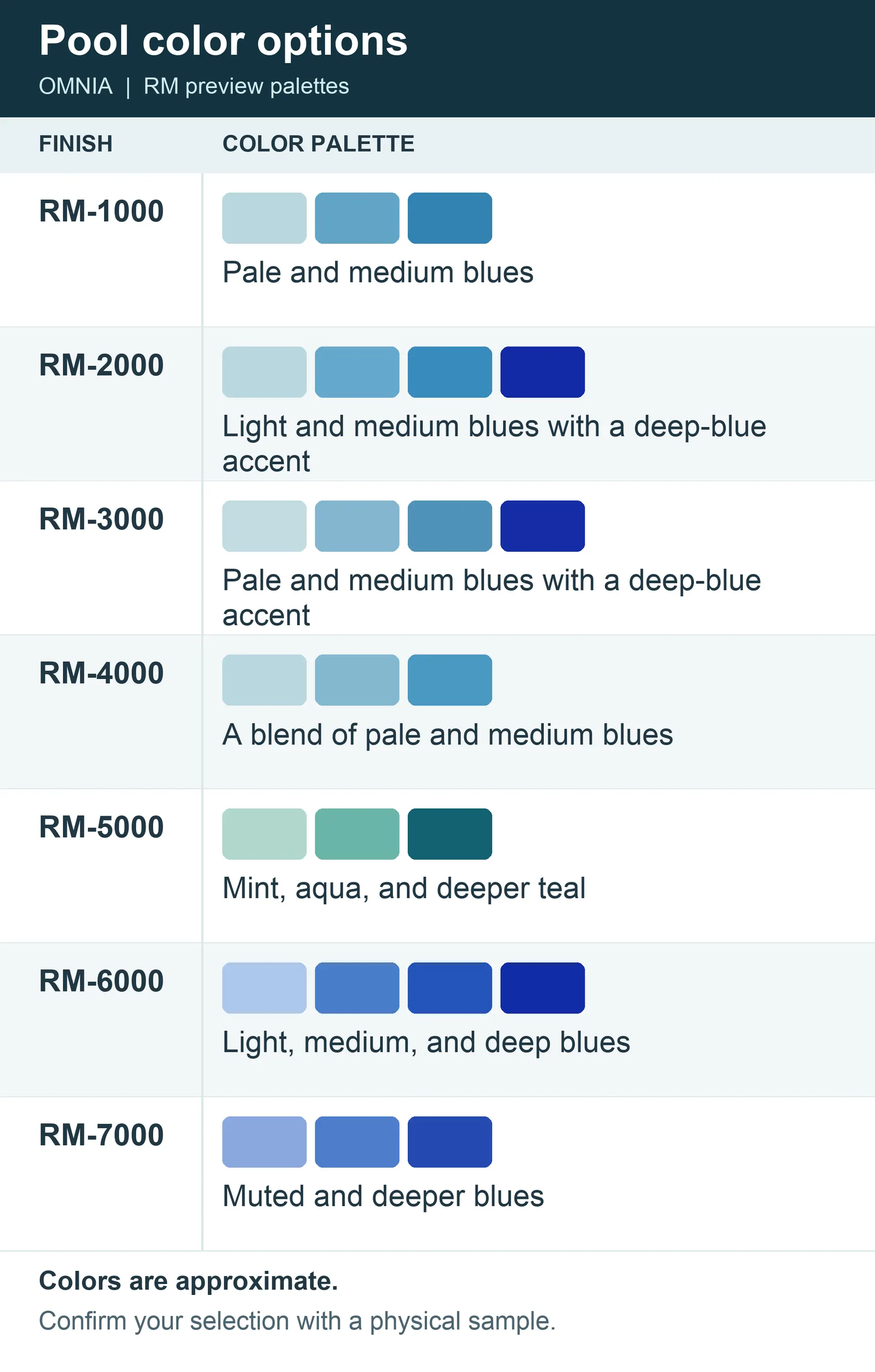
Compare Omnia’s blue and aqua RM palettes when choosing a replacement finish. For a local repair, compare a physical sample against the existing tiles before ordering.
Explore Omnia’s pool-color guide for more ideas.
What Affects Cost and Downtime?
Resurfacing costs depend on more than the pool’s length and width. The treated area includes walls, floors, steps, and other features, while the condition beneath the finish determines the preparation required.
A detailed quotation should clarify:
Removal and disposal of existing materials.
Surface preparation and underlying repairs.
Waterproofing and joint work where required.
Finish materials and installation.
Fitting or seal changes.
Refilling, startup, and handover.
Transport, tax, and any exclusions.
Downtime also includes preparation, repairs, curing, and refilling. Request a schedule based on the actual work rather than relying on one standard completion time.
Discuss Your Pool’s Condition with Omnia Pools
There is no single age at which every pool needs a new finish. Widespread defects, recurring failures and the condition beneath the tiles are more useful indicators.
Contact Omnia Pools with your location, pool dimensions, photographs, approximate finish age, and repair history. Include details of any loose tiles, recurring cracks, or water loss so the team can discuss the next steps.